Retaining Walls for Sloped Blocks: How to Fix a Sloping Backyard with Proper Drainage
So… you’re dealing with a sloped block or a steep backyard. You already know that landscaping on a slope isn’t as simple as it looks. Truth is, what works on flat land often fails when gravity, water runoff, and soil movement come into play… and inevitably they will.
On sloped properties, retaining wall are often the key to turning an awkward slope into a usable backyard. When designed properly they don’t just hold soil in place… they manage drainage, reduce erosion, and create outdoor spaces that are practical, low maintenance, and built to last.
Why Sloping Block Landscaping Sunshine Coast Projects Create Challenges
A slope changes how soil and water behave. Without the right structure in place, sloping yards are more exposed to erosion, runoff, and long-term movement that can damage landscaping projects over time.
Basically, when you understand why hardscaping on sloped blocks can fail, then you’ve already taken the first step toward solving the problem, and it doesn’t matter if you’re planning a new landscape or trying to fix an existing one.
Water runoff, soil pressure, and erosion
On sloped land, water naturally runs downhill. During heavy rainfall, water flow increases rapidly, especially where poor drainage exists. As water runs across the slope, it can cause soil erosion, wash material away, and increase soil pressure behind any structure that isn’t properly supported.
This is one of the most common reasons a built retaining wall fails. It’s not because of the wall itself, but because drainage wasn’t addressed early.
Why a sloping backyard is hard to use
A sloping backyard limits how you can use the space. Steep slopes make it difficult to place garden beds, paths, or seating areas, and mowing or maintenance quickly becomes a chore.
Without structural support, sloped yards often end up underused simply because they’re impractical.
How Retaining Walls Create Usable Space on a Slope
A retaining wall changes the shape of the land. Instead of fighting the slope, it works with it by stabilising soil and forming level areas.
These structural marvels do more than create usable space. They improve drainage and reduce maintenance.
Terrace a sloped block
Terracing is one of the most effective ways to deal with a slope. By that I mean you step the land into tiers so that the walls provide flat platforms that can support garden beds, paved areas, or lawn.
Terraced designs:
- reduce runoff
- control erosion
- improve access across the yard
This approach works on both steep slopes and more gentle slopes.
Turn structure into style
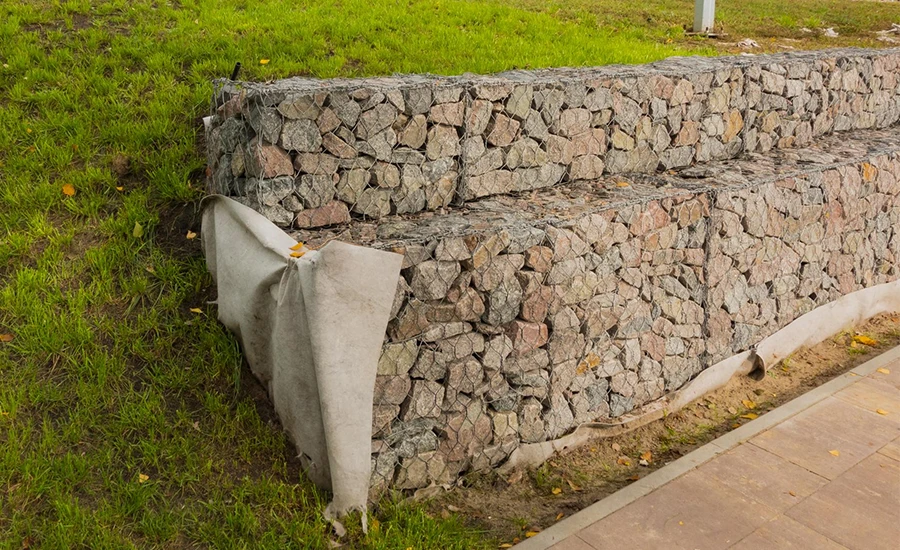
Modern solutions designed to hold back soil don’t need to look heavy or industrial. With smart design, wall blocks, concrete sleepers, timber sleeper walls, or even gabion systems can be used to create clean lines and a natural look.
Good structure and style go hand in hand when support walls are planned as part of the overall landscape.
Drainage: The Make-or-Break Factor on Sloped Blocks
Drainage is critical on any slope. Without proper drainage, even well-built retaining walls can struggle over time.
When you dial in proper management of water, you protect both the retaining wall and the surrounding backyard. You determine the passage of water by directing the flow to avoid build up behind the wall itself and to avoid crucial structural elements such as footings on your house or other infrastructure.
Manage the water behind the retaining wall
Water that builds up behind a wall increases pressure and can cause movement. Proper drainage systems, such as gravel backfill, ag pipes, and weep holes, allow water to escape safely.
Good drainage is part of the planning process. It reduces soil pressure and helps keep soil in place during heavy rain.
Poor drainage and long-term damage
Poor drainage is a leading cause of retaining wall failure. Over time, trapped water can lead to cracking, leaning walls, or soil movement that affect nearby structures.
This is why proper planned drainage is as important as the retaining wall itself.
Choose the Right Retaining Wall for a Sloped Yard
Not every retaining wall is suited to every slope. The right retaining wall depends on soil conditions, slope angle, and how the space will be used.
Getting the right solution early prevents costly changes later.
Materials and construction options for sloping blocks
Common options for sloped blocks include:
- timber sleeper walls
- concrete sleeper walls
- block walls
- custom retaining systems for steeper slopes
In some cases, engineered retaining walls may be required, particularly where the wall exceeds a certain height or supports significant loads.
Height, excavation, and engineering considerations
Excavation depth, wall height (including whether it exceeds 1 metre or 1m overall), and soil type all influence whether you are going to need any structural engineering. On taller or multi-level designs, a properly engineered solution ensures the wall you build will last.
In some situations, council approval may also be required. It depends on height and proximity to boundaries.
Plan Retaining Walls as Part of the Whole Landscape
Retaining walls work best when they’re planned alongside the rest of the landscape, not added later as a fix.
Integrate walls with outdoor space
When you use walls that retain soil as part of your overall design, they can define outdoor space, support split-level or multi-level layouts, and improve how your backyard functions day to day.
Put the work in early on the planning and you’re going to have a more cost-effective and low maintenance result.
Add long-term value
Well-planned retaining walls add value by improving usability, appearance, and stability. A structure that’s built to last reduces ongoing maintenance and helps protect the home’s surrounding landscape.
Get Sloped Block Landscaping Right the First Time
Sloped blocks don’t have to be a limitation. With proper planning, drainage, and the right retaining wall solution, a sloping backyard can become one of the most functional parts of a property.
Whether you’re dealing with a steep slope, poor drainage, or soil movement, the key is smart design and local knowledge. When retaining walls are designed properly and integrated into the landscape, they solve problems, not create them.
Want to chat with an expert with decades of experience to help you explore the best options? Call us, Greener Landscaping on 07 4120 7807 and we’ll set you straight! 😉