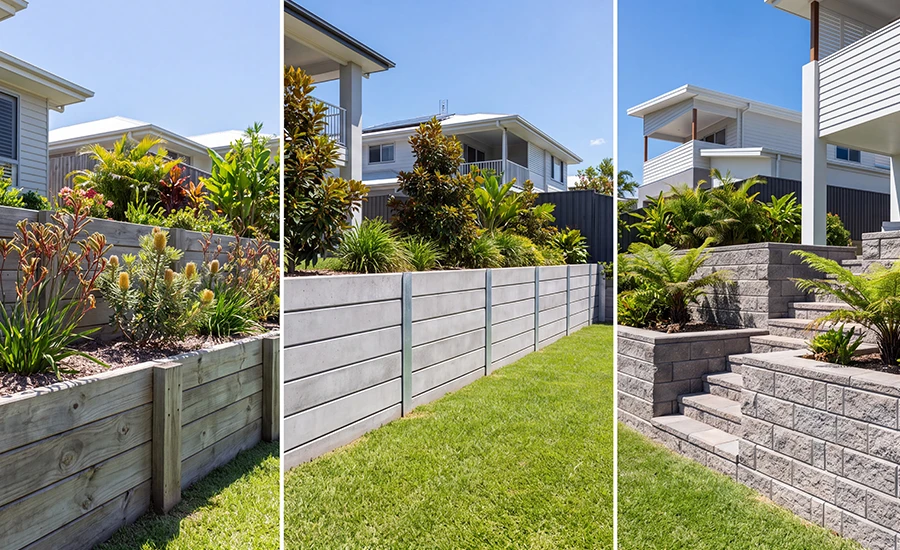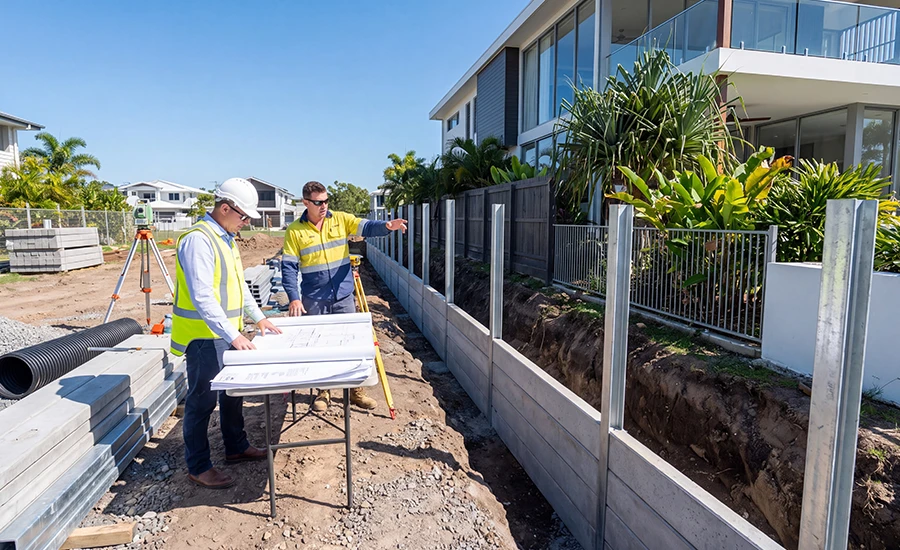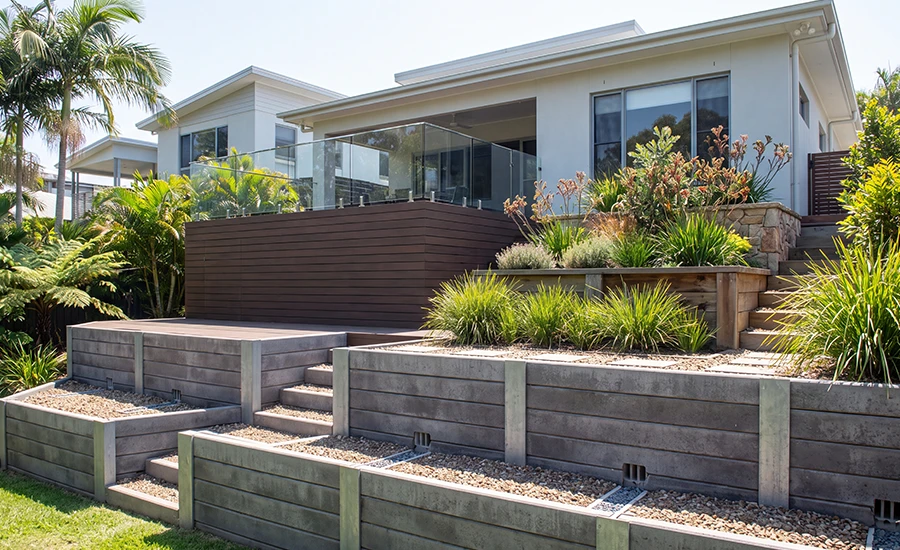
Most homeowners come to a landscaping project with a general picture of what they want the finished result to look like. A deck overlooking the garden, raised garden beds along the back fence, level lawn where there used to be a slope. What’s less obvious is the correct landscaping project order those things need to happen in. Getting the sequence wrong is one of the most common and costly mistakes in residential landscaping on the Sunshine Coast.
Why the Right Landscaping Project Order Matters
It’s tempting to start with whatever is most visible or most exciting. The deck is the thing you’ll use every weekend, so it goes in first. The garden beds are quick and satisfying, so they happen early. The retaining wall is expensive and unglamorous, so it gets deferred.
The problem is that each of these elements affects the others. Build a deck before you build a retaining wall on a sloping block and you may find the deck subframe needs to be modified or partially demolished to allow the wall construction machinery in. Build a raised garden bed before your drainage is sorted and you’ll be pulling them out when water starts pooling where it shouldn’t. The right sequence isn’t about preference, it’s about what has to be physically true before the next thing can happen properly. This is why DIY large garden projects can be fraught with problems and why you should at least consult a professional in the planning and design phases.
Landscaping Project Order: Retaining Walls and Drainage First
As a general rule, anything involving earthworks, drainage, or structural footings comes first. On properties with any slope or level change, that almost always means retaining walls.
Why Retaining Walls Come First in Landscaping Projects
A retaining wall doesn’t just hold back soil. It defines the levels on your property, determines where usable flat space exists, and establishes where drainage needs to go. Everything built above or in front of it — decking, garden and raised beds, lawn, paving — needs to relate to those finished levels. If the levels aren’t set first, you’re making assumptions that may not hold once the wall goes in.
On sloping Sunshine Coast blocks, this plays out repeatedly. A homeowner installs a deck at what they expect will be the finished level, then discovers the retaining wall needs to go in deeper than expected, or that the drainage behind the wall changes the grade in a way that affects the deck framing. Fixing it after the fact is expensive. Getting the wall in first removes the uncertainty.
Sort drainage before anything goes on top of it
If your property has any drainage issues, these need to be resolved before any other landscaping work begins. What are those issues, I hear you ask. If you see water pooling after rain, soil moving on slopes, wet patches that don’t dry out, then you need to talk to a specialist. Drainage solutions often involve subsoil work that would damage or disrupt anything already built above them.
This includes drainage behind retaining walls, subsoil drainage under lawn areas, and stormwater management that affects where water goes after leaving your roof or paved areas. Landscape your garden properly by first sorting what happens underground, and everything built on top will perform as it should.
Decking Comes After Structure
Once retaining walls are in and levels are established, decking is typically the next element to install. It’s a fixed structure with its own footings and subframe, and it needs to relate correctly to finished floor levels inside the house, to the levels established by the retaining work, and to any future paving or lawn areas around it.
Building the deck at this stage gives you a solid reference point for everything that follows. Garden edges, raised garden bed positions, and paving can all be set out in relation to the deck once it exists, which makes the overall layout much easier to coordinate.
One thing worth knowing: deck approvals in Queensland sometimes require engineering or council sign-off, particularly for elevated structures. Getting that process underway early, before construction starts, avoids delays that can hold up the whole project.
Garden Beds and Soft Landscaping Come Last
Raised garden beds, planting, lawn, and garden edges are the finishing layer. They go in after the structural and earthworks elements are complete, and for good reason: construction activity damages them. Machinery tracking across new lawn, soil from excavation dumped on garden beds, concrete splatter on new planting — all of this is avoidable if the soft landscaping waits until the heavy work is genuinely finished.
This doesn’t mean your garden is an afterthought. It means it’s protected by being sequenced correctly. A raised garden bed installed after the retaining wall is complete can be positioned precisely in relation to the finished levels, properly connected to the drainage system, and built without the risk of being disturbed by work happening around it.
The Cost of Getting the Sequence Wrong
There’s a version of this that plays out on Sunshine Coast properties more often than it should. A homeowner gets a full scope quote, decides to stage the work to manage budget, and starts with the element they want most rather than the element that needs to go first.
Six months later the retaining wall they deferred is going in next to a deck that’s already built. The machinery can’t get close enough. The deck needs to be partially demolished and rebuilt. What would have cost a certain amount done in the right order now costs significantly more done in the wrong one.
Staging a landscaping project is completely reasonable. Staging it in the wrong sequence is where it becomes expensive. The conversation worth having with your landscaper before anything starts is not just what you’re building, but in what order and why.
FAQ
Do retaining walls always need to go in before decking?
On sloping blocks, yes in almost every case. The retaining wall establishes the finished levels the deck needs to relate to, and the construction process (involving machinery, excavation, concrete) can damage a deck that’s already in place. On flat blocks the sequencing is more flexible, but drainage and any subsoil work should still precede structural builds.
Can I stage my landscaping project to manage budget?
Yes, and most people do. The key is staging in the right order: retaining walls and drainage first, then decking and fixed structures, then garden beds and soft landscaping. Done this way, each phase is complete and won’t be disturbed by what comes next.
What happens if I build my deck before the retaining wall?
The most common outcome is that retaining wall construction becomes significantly more difficult and expensive. Machinery may not access the site properly, and the deck subframe may need modification to accommodate the finished wall height or drainage requirements. In some cases partial demolition is unavoidable.
How do retaining walls and raised garden beds relate to each other?
Retaining walls often create the level platforms that raised garden beds sit on or in front of. Building both as part of a coordinated plan produces a much cleaner result than adding garden beds to an existing wall as an afterthought. The drainage behind the retaining wall can also be designed to benefit the garden beds positioned above or beside it.
Should I get all my quotes at the same time even if I’m staging the work?
Yes. Getting a full scope quote upfront means each element is designed in relation to the others, the sequencing is planned properly, and you avoid the situation where the second contractor has to work around what the first one built without knowing it was coming.
Good Landscaping Is Planned from the Ground Up
The properties that end up looking and performing best aren’t always the ones with the biggest budget. They’re the ones where someone thought about the sequence before the first shovel went in. Retaining walls first to set the levels, drainage sorted before anything goes on top, decking once the structure is established, and garden beds as the considered finishing layer.
That’s how we plan every project at Greener Landscaping across the Sunshine Coast and Gold Coast… and it’s a conversation we’re happy to have before anything starts.
Call Greener Landscaping on 07 4120 7807 for a free quote.