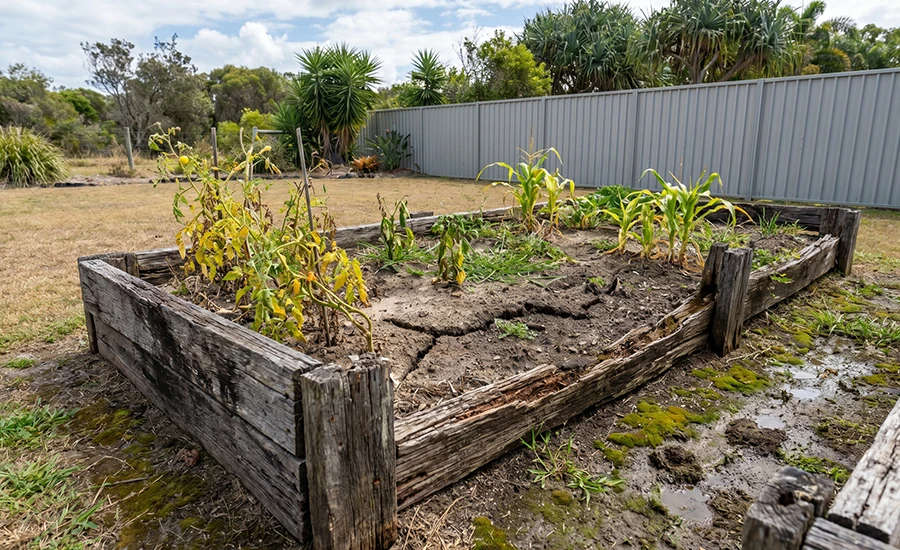
You spent a weekend building your raised garden bed. You filled it with quality soil, planted herbs and veggies carefully, and through the first growing season it looked exactly like the inspiration photos. Two seasons later, the timber is soft to the touch, the soil sits well below the rim, plants are leggy, and the whole garden has that tired, slumping look you see in plenty of older backyards. If you’re wondering why raised garden beds fail so consistently around the two to three year mark, it’s rarely one thing.
Most raised garden beds fail because a handful of common gardening mistakes compound, and most of them get baked in on day one. Build the foundations right and a well-made raised bed should comfortably last 10 to 15 years. Get them wrong and you’ll be rebuilding before your gardening gloves wear in.
Here’s a practical walk through the common raised garden bed mistakes we see across Sunshine Coast yards, and how to sidestep each one before it costs you a season.
Why Raised Garden Beds Fail: Poor Drainage Is the Biggest Cause
If you only fix one thing in your garden, fix drainage. Sunshine Coast soil is mostly heavy clay, and when summer storms drop 100mm in an afternoon, that water has nowhere to go. A raised garden bed sitting on top of clay becomes a bathtub. Plant roots drown in waterlogged soil, the bed turns soggy and anaerobic, and the bacterial mix that keeps soil healthy collapses within weeks.
Signs of poor drainage show up gradually. Yellowing leaves you can’t explain. Herbs that keel over despite regular watering. A faintly sour smell when you dig down 200mm. By year two, you’ve replanted three times and quietly given up on the bed.
Good raised beds drain in three ways: through a coarse gravel or scoria base under the soil, through weep holes or gaps in the lower courses, and through a soil mix that doesn’t compact into concrete. Skip any one and you’re working against the climate. To improve drainage from the start, line the base with 100mm of coarse material before any soil goes in. Done properly, you get excellent drainage that keeps the bed productive year after year. Our full breakdown of raised garden beds on the Sunshine Coast covers the drainage detail step by step.
Raised Garden Bed Mistakes: Choosing the Wrong Soil Mix
The soil you fill your raised bed with on day one is not the soil you’ll have in two years. Organic matter (compost, aged manure, mushroom mix) breaks down. It’s meant to. That’s how plants feed. But as it breaks down, the bed loses volume, sometimes 30 to 40 percent in the first 18 months.
That’s why you see raised beds where the soil sits well below the timber edge. Nobody forgot to fill them. The soil disappeared, nobody topped it up, and the depth is now too shallow to support healthy plant roots.
How Proper Soil Layers Prevent Raised Garden Beds From Failing
A common mistake is filling a deep planter entirely with bagged potting soil or premium garden soil. It’s expensive, it compacts quickly, and it breaks down all at once. A better approach layers materials by decomposition rate. Start with coarse organic matter at the base. Add a sandy loam mix above that. Finish with a high-quality veggie blend in the top layer, around 200mm deep. The base holds structure, the middle holds water, and the top feeds your plants.
For ongoing soil health, add compost and organic matter each autumn, mulch heavily through summer to help retain moisture, and amend the existing soil with aged manure before each planting cycle. That single habit alone keeps your raised bed gardening setup productive for the long haul.
[Insert image: layered garden bed cross-section with drainage base]
The Wrong Spot, The Wrong Outcome
A surprising number of raised garden beds fail because they’re in the wrong spot. Most veggies and herbs need 6 to 8 hours of direct sunlight a day to thrive. Less than that and you’ll get leggy, weak plants regardless of how good your soil is. Too much harsh western sun and the beds bake out by lunchtime through summer.
Airflow matters too. Beds tucked tightly against fences or under dense canopies hold humidity, attract pest pressure, and slow soil temperature stabilisation through spring. Aim for morning sun, afternoon shade where possible, and at least 600mm of clearance around each bed for airflow and access. Choosing the wrong spot is one of those gardening mistakes you can’t easily fix once everything is built.
Overwatering, Underwatering, and Inconsistent Water
Water is where most gardeners trip up. Overwatering is more common than underwatering, especially in raised beds with poor drainage. Plants sit in soggy soil, roots rot, and within weeks you’ve lost a crop. Underwatering shows up the opposite way: wilted leaves, dry crusty topsoil, and shallow root systems that can’t reach moisture.
Hand watering is fine for small setups, but a basic drip or soaker system removes most of the guesswork. Drip irrigation delivers water directly to the soil at the base of each plant, and soaker hoses do the same job at lower cost. Both reduce evaporation and keep moisture consistent, which matters most through the Sunshine Coast summer.
A thick layer of mulch (50 to 75mm of sugarcane or pea straw) sits over the soil to help retain moisture and moderate soil temperature, so your raised bed handles the dry weeks without stress.
Overcrowding and Poor Plant Spacing
Plant spacing gets ignored more than any other rule in raised bed gardening. New gardeners (and plenty of experienced ones) plant too many seedlings too close together, hoping for a bigger harvest. The opposite happens. Overcrowded plants compete for nutrients, shade each other out, restrict airflow, and create the perfect environment for pest and weed pressure.
The packet spacing on seedling labels exists for a reason. Follow it. If you want more from a small raised garden bed, think about which plants to grow vertically or pair through companion planting rather than cramming many plants into the same square metre. Companion planting also pulls in pollinators and beneficial insects, which lifts yields naturally and keeps pest numbers down without reaching for chemical fertiliser shortcuts.
Material Choice and Structural Failure
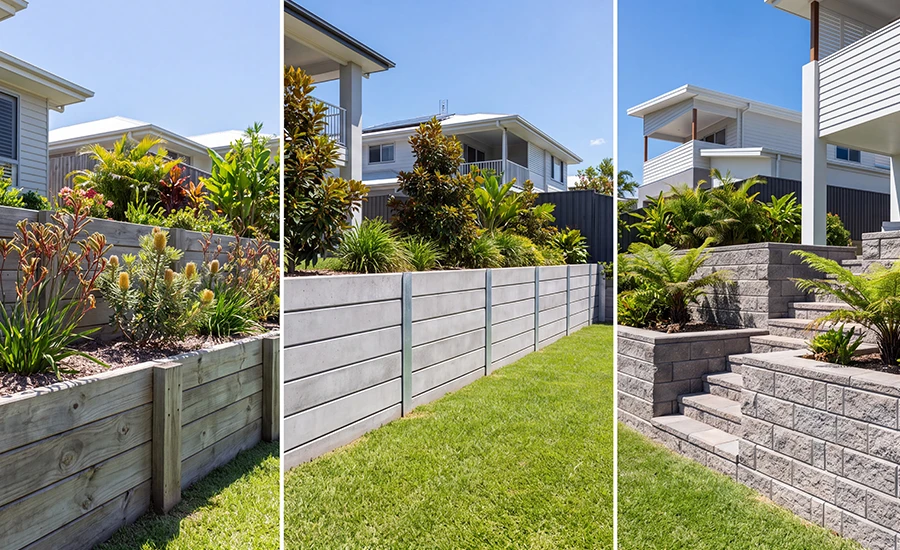
Coastal Queensland is brutal on timber. Untreated pine garden bed boards rarely last beyond 18 months in direct soil contact. Even H4 treated pine usually shows soft spots by year three. Hardwood sleepers like ironbark, spotted gum, and redgum can last 8 to 12 years if sealed properly. Concrete sleepers can last 25 plus.
Raised beds taller than 600mm are holding back a serious amount of weight. Wet soil weighs 1.5 to 1.8 tonnes per cubic metre, and that lateral pressure slowly pushes budget beds out of square. Once the structure goes, the soil follows, drainage fails, and the bed is finished. Our comparison of timber, block, and concrete retaining walls in coastal QLD covers the material trade-offs in detail, and many of the same principles apply to taller raised garden beds.
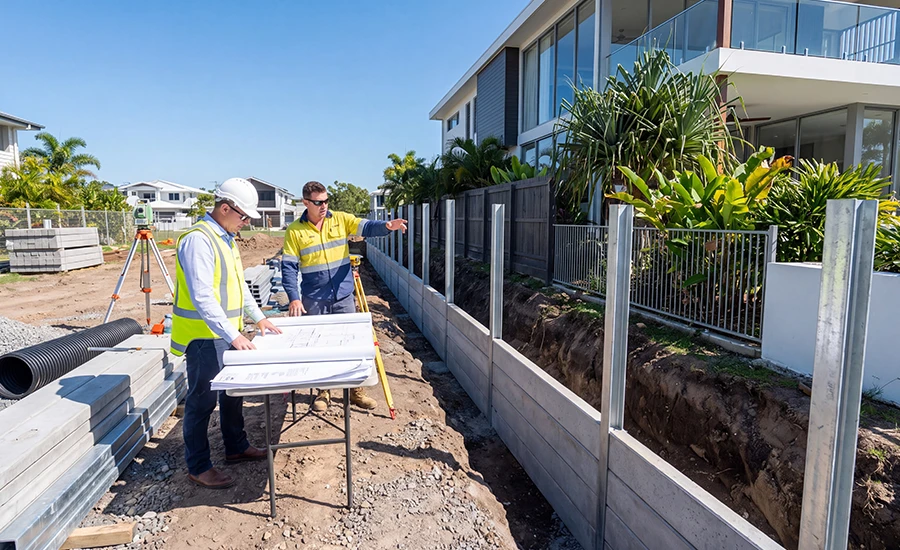
If your raised bed doubles as a low retaining wall, you’re now in structural territory. Anything holding back soil above 1m needs engineering and council approval in most local government areas. Our deep dive into how we design and construct block retaining walls explains what goes into a structure built to last.
Neglect: The Slow Failure You Don’t Notice
Neglect doesn’t look like neglect at first. It looks like skipping a top-up of compost one autumn. Forgetting to refresh the mulch before summer. Letting one season’s weeds set seed because you were busy. Each one is small. Stacked across two or three years, they’re the common pitfalls that end the bed.
A productive garden bed asks for about 20 minutes of attention every fortnight: a quick weed, a check on the mulch layer, a light fertiliser top-up at the start of each growing season, and a closer look at the soil to spot signs of compaction or drainage trouble. Honestly, the gardeners who get the longest life out of their setups are the ones who treat that 20 minutes like a habit, not a chore.
In-Ground or Raised? The Bed Type Decision Matters
Sometimes the bed type itself is part of the problem. In-ground gardens in heavy clay soil struggle with drainage and root penetration. Raised gardens dry out faster but give you full control over soil quality from day one. The right call depends on your block, your existing soil, and what you want to grow. Our side-by-side on raised gardens vs in-ground gardens in QLD conditions can help you decide before you build.
How To Make Raised Beds That Actually Last
The fundamentals are unglamorous but they work:
- Use the right material for your budget horizon (hardwood or concrete for 10 plus years)
- Build proper drainage at the base before any soil goes in
- Layer your soil mix instead of filling with one product
- Reinforce corners and bracing on anything over 600mm deep
- Top up soil and compost annually
- Pick a spot with 6 to 8 hours of direct sunlight and good airflow
- Use drip irrigation or soaker hoses for consistent water
- Follow plant spacing and avoid overcrowding
That’s what we do every day at Greener Landscaping. Building raised beds that look good in year one is easy. Building beds that still perform in year five takes planning.
Frequently Asked Questions
How long should a raised garden bed last?
A well-built raised garden bed using hardwood sleepers, concrete blocks, or treated steel should last 10 to 15 years minimum, with concrete pushing past 25. Pine and untreated timber beds typically need replacing within 2 to 4 years in coastal Queensland.
Why does my raised garden bed soil keep sinking?
Organic matter in your soil mix breaks down naturally. You’ll typically lose 30 to 40 percent of your volume in the first 18 months. Top up with quality compost and garden soil each autumn to maintain depth and keep your plants fed.
How much sunlight do raised garden beds need?
Most veggies and herbs need 6 to 8 hours of direct sunlight a day. Leafy greens manage with 4 to 6 hours. Less than that and your plants get leggy, weak, and slow to produce regardless of soil quality.
Can I save a failing raised bed or do I have to start over?
It depends on the structure. If the timber is rotting, corners are bowing, or drainage has failed, rebuilding is usually cheaper than patching. If the structure is sound but the soil has died, dig out the top 300mm, refresh the layers, and you’ll often get another 5 plus years from the bed.
What are the most common raised garden bed mistakes to avoid?
Poor drainage, the wrong soil mix, choosing the wrong spot for sunlight, overwatering, overcrowding plants, and neglecting annual top-ups. Sidestep those and most raised beds thrive for a decade or more.
Do I need council approval to build a raised garden bed?
Standalone raised garden beds under 1m in height don’t usually need approval. Beds that double as retaining walls, sit on a property boundary, or hold back soil above 1m generally require certification and council approval. Always check with Sunshine Coast Council before you build.
Build A Raised Garden Bed Worth Keeping
Raised garden beds that fail at 2 to 3 years aren’t failing because gardening is hard. They’re failing because the foundations weren’t built for the climate, the soil wasn’t layered properly, and a handful of common gardening habits got skipped. Get the foundations right and you’ll have raised beds your grandkids could still be planting tomatoes in.
If you’re planning a new raised garden bed setup, rebuilding a tired backyard, or you’ve got beds that won’t make it through another wet season, give us a call on 07 4120 7807. We’ll walk through what’s going wrong and what it’ll take to build something that lasts.