The typical retaining wall cost Gold Coast homeowners pay in 2026 is $250 to $900 per linear metre installed, or around $3,000 to $12,000 for a standard backyard wall. Taller engineered walls on steep or tight sites can run well past $1,200 per metre. Below, you’ll find prices by material, the extras that push the final cost up, and how to compare quotes before anyone starts digging.
How Much Should You Pay for a Retaining Wall?
For most Gold Coast properties, a fair price is $350 to $550 per metre for concrete sleepers up to 1 metre high, with drainage included. If a quote is well below that, something is usually missing. If it’s well above, ask why, because height, access or engineering usually explain the gap.
The price of a retaining wall depends on four things: height, materials, soil and site access. Labour is a big part of every quote, and on hard-to-reach blocks it can make up half the price or more.
Retaining Wall Price per Square Metre or Metre
Most local builders quote per linear metre, meaning one metre along the length of the wall. The table below shows typical installed prices for 2026, including GST.
| Wall type | Typical height | Installed cost per linear metre |
|---|---|---|
| Treated pine sleeper | Up to 1 m | $250 to $400 |
| Hardwood sleeper | Up to 1 m | $300 to $450 |
| Concrete sleeper (steel posts) | Up to 1 m | $350 to $550 |
| Concrete sleeper, engineered | 1 m to 1.5 m | $600 to $900 |
| Rock or boulder | Up to 1 m | $300 to $600 |
| Concrete block (besser or interlocking) | Up to 1 m | $500 to $800 |
| Engineered block wall | 1.5 m to 2 m+ | $900 to $1,500+ |
| Sandstone blocks | Up to 1 m | $550 to $1,000 |
Some guides quote per square metre of wall face instead. On a 1 metre high wall the two numbers match, but on taller walls they don’t, so check the unit before you compare.
Retaining Wall Materials: Timber Retaining Walls vs Concrete Sleepers
Concrete sleepers are the best value for most homes here, even though timber is cheaper upfront.
Timber walls cost less to build, which is why so many older backyards have them. In the humid Gold Coast climate, though, a timber sleeper wall often needs replacing within 10 to 15 years, and hardwood doesn’t last much longer once it stays damp.
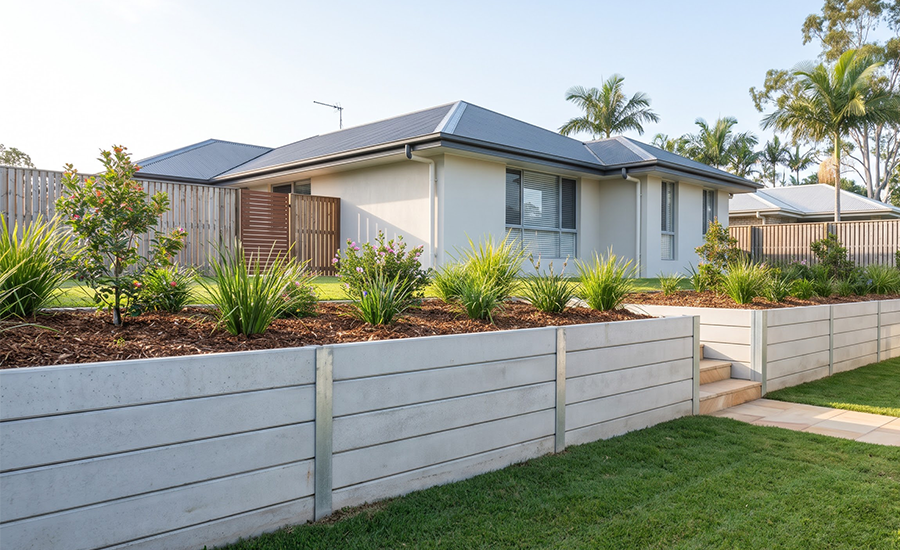
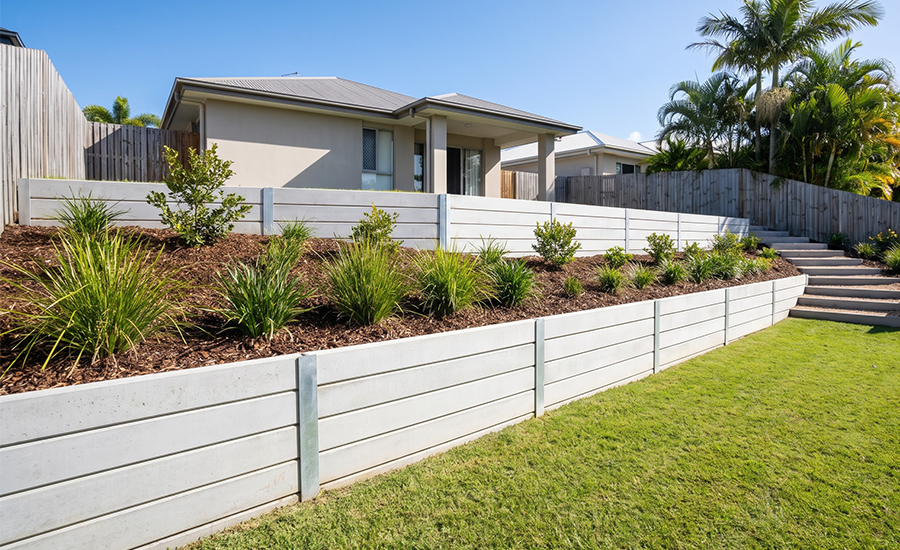
A concrete sleeper retaining wall is a little dearer but won’t rot or attract termites, and it usually lasts 20 to 30 years or longer. The sleepers slide between galvanised steel posts set in concrete footings, so installation is quicker than with blocks. The concrete sleeper wall Gold Coast homeowners choose most often sits between 600 mm and 1.2 metres high.
Concrete Block Retaining Walls and Sandstone Retaining Walls
Block and sandstone cost the most, but they also last the longest and handle the biggest loads.
Block walls are the go-to for larger structural retaining walls, walls close to a house or driveway, and anywhere you want a clean, permanent finish. Interlocking retaining wall blocks lock together without mortar, while besser block walls are core-filled with steel and concrete. A well-built retaining wall in block can last 50 years or more. Brick retaining walls are rarely used now because they crack easily under soil load.
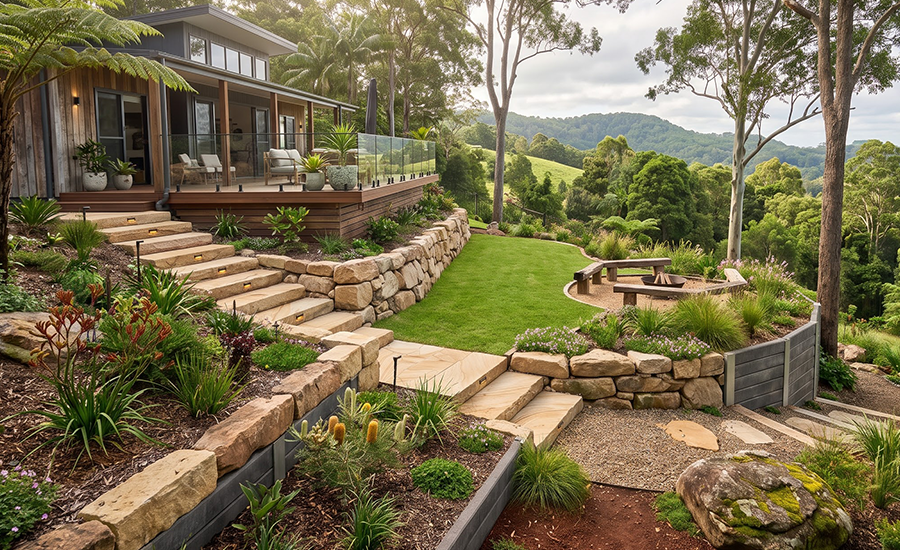
Sandstone suits established gardens and hinterland homes around Tamborine and Mudgeeraba. The blocks are heavy, so machinery and labour push the price up.
If you’re still deciding, our guide to timber vs block vs concrete retaining walls compares how each material holds up in Queensland conditions.
Factors That Influence Retaining Wall Costs on the Gold Coast
Height, ground conditions and access influence the cost more than anything else, so two walls of the same length can be priced thousands of dollars apart.
Wall Size and Retaining Wall Construction
Height matters more than length. A 1.5 metre wall puts far more pressure on the wall than a 1 metre one, so it needs deeper footings, heavier posts and often engineering. Doubling the height usually more than doubles the price, depending on wall type and soil. Wall length is simpler: twice the length is roughly twice the price.
Soil, Access and Labour Cost
A typical retaining wall in the Gold Coast hinterland deals with heavy clay or rock, which slows digging and can add hire time for a rock breaker. Coastal suburbs like Palm Beach and Burleigh have sandy soil that drains well but needs good compaction. On a tight lot in a Pimpama or Helensvale estate where a small excavator can’t fit, soil gets moved by wheelbarrow, and labour cost climbs quickly.
Cost Breakdown: Drainage, Engineering and Site Preparation
Drainage, excavation and engineering can add a fifth or more to the total cost, so make sure every quote includes them.
| Item | Typical 2026 cost |
|---|---|
| Drainage (ag pipe, gravel, filter fabric) | $40 to $90 per metre |
| Excavation and spoil removal | $500 to $3,000+ per job |
| Demolition of an old wall | $50 to $180 per metre |
| Engineering design (RPEQ) | $800 to $2,500 |
| Building approval | $500 to $2,000 |
| Soil or geotechnical report | $500 to $2,500 |
Every retaining wall needs a drainage path. We’ve lost count of the call-outs to walls only three or four years old that are already leaning. When we dig behind the wall, there’s no ag pipe and no gravel, just wet clay pushing against the back of the wall after every summer storm. With the Gold Coast’s wet season running from December to March, a wall that doesn’t drain is the most common cause of wall failure we see.
Our article on retaining wall drainage explains what proper drainage looks like and the warning signs to watch for.
Engineering and Approval for a Retaining Wall on the Gold Coast
Most walls under 1 metre don’t need approval, but a wall over 1 metre generally needs building approval and an RPEQ engineer’s design. Approval is also usually required if the wall sits within 1.5 metres of a building or another wall, or carries extra load such as a driveway, pool or house slab. City of Gold Coast overlays for flood-prone or steep land can add requirements, so check your property first.
Any retaining wall work valued at more than $3,300 must be done by a QBCC-licensed Gold Coast contractor. For the full picture on height limits and permits, see our plain-English guide to retaining wall approval in QLD.
Should You Build a Retaining Wall Yourself or Hire a Builder?
DIY only makes sense for low retaining walls under about 500 mm that aren’t holding back much soil. For anything near your house or a boundary, or anything taking real soil load, use licensed retaining wall installers. A failed wall usually costs more to remove and rebuild than doing it properly the first time, and an engineer can tell you whether an old wall is structurally sound.
How to Get an Accurate Retaining Wall Quote
The most accurate quotes come from builders who visit your site, check access and soil, and itemise everything. Get quotes from three local retaining wall builders and check that each one shows:
- Wall materials, height and total length
- Footing depth and post spacing
- Drainage details, including where the water will go
- Excavation, spoil removal and site clean-up
- Engineering and approval costs, or a note that they aren’t needed
- QBCC licence number and warranty
If one quote is much cheaper than the rest, check which line is missing. Ask about their experience on sloping blocks, and ask to see photos of past retaining wall projects. And if you’re reading this, you’re already on the website of an experienced retaining wall team that does this every week, so you’ve come to the right place.
FAQ
What is the typical cost of a retaining wall in Queensland?
Most Queensland homeowners spend $3,000 to $12,000 on a typical backyard wall. Expect to pay more in hilly areas, and larger engineered walls can pass $20,000.
What does a 10 metre wall cost?
A 10 metre run of concrete sleepers at 1 metre high usually costs $3,500 to $5,500 with drainage and backfill. The same length in engineered block may cost $9,000 or more.
What does a sandstone wall cost?
Expect $550 to $1,000 per metre for sandstone up to 1 metre high. Sawn blocks and engineered walls cost more.
How much does it cost to replace an existing wall?
Budget for the new wall plus $50 to $180 per metre for demolition and removal. Replacing a failed wall also means new drainage, so it usually costs more than a fresh build.
What is the cheapest type of retaining wall?
Treated pine is the cheapest to build, but it rarely lasts as long as concrete or block. Across Australia, the cheapest option upfront isn’t always the cheapest over 20 years.
Do you need council approval for a retaining wall in QLD?
Usually yes if it’s taller than 1 metre, within 1.5 metres of a building or another wall, or supporting extra load. Lower walls that meet every exemption condition usually don’t.
How long does it take to build a retaining wall?
A typical 10 to 15 metre sleeper job takes two to four days. Engineered block walls take one to two weeks, plus time for design and approval.
Building Retaining Walls That Last With a Gold Coast Retaining Wall Builder
Budget $250 to $900 per metre, insist on drainage and engineering in every quote, and compare the full price rather than headline rates. A wall built properly the first time lasts decades. A cheap one can cost you twice.
A builder on the Gold Coast who handles design, approval and construction in one package saves you time and stops details falling through the cracks. We design and build walls across the Gold Coast, Tamborine and Ormeau, from low garden walls to engineered walls on steep hinterland blocks. Planning your next retaining wall project? You can see what we do on our landscaping Gold Coast and Tamborine page.
If you need a wall built or an old one checked, and want to know what your wall might cost, get in touch with Greener Landscaping, call 07 4120 7807 for a free quote.
Related posts:
- Stone vs Timber vs Concrete. Which Retaining Wall Material Works Best in QLD?
- Retaining Wall Approval QLD: Height Rules, Permits & Council Approval Guide
- Retaining Wall Cost Sunshine Coast 2026: What to Budget and Why
- Do You Need Council Approval for a Retaining Wall on the Gold Coast? Queensland Building Approval Explained