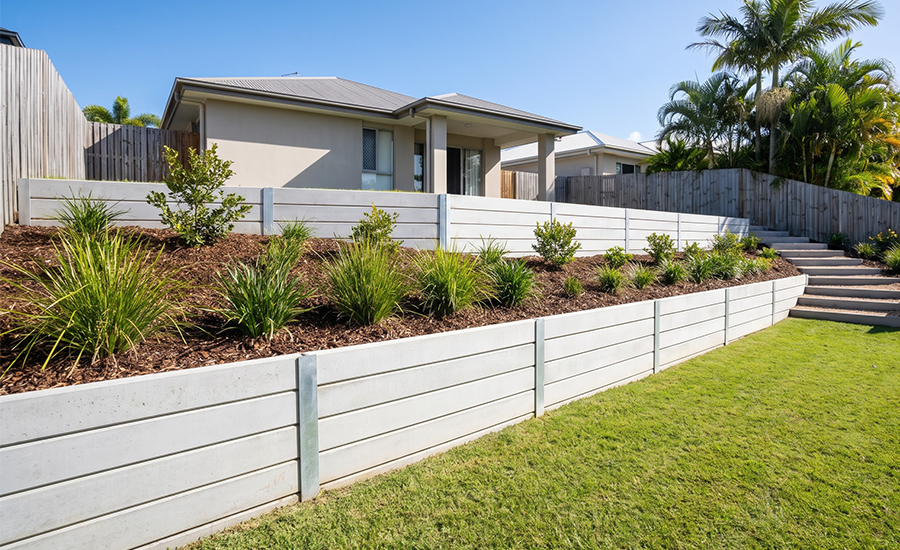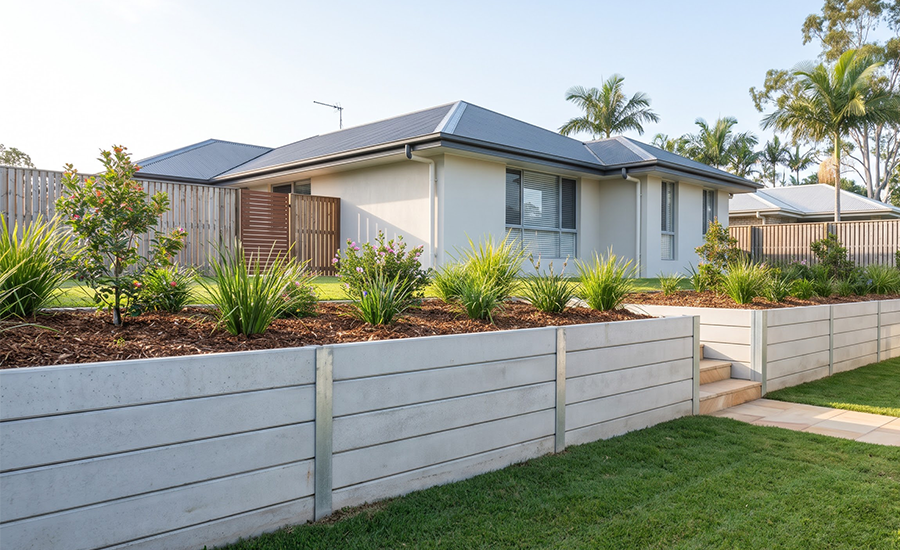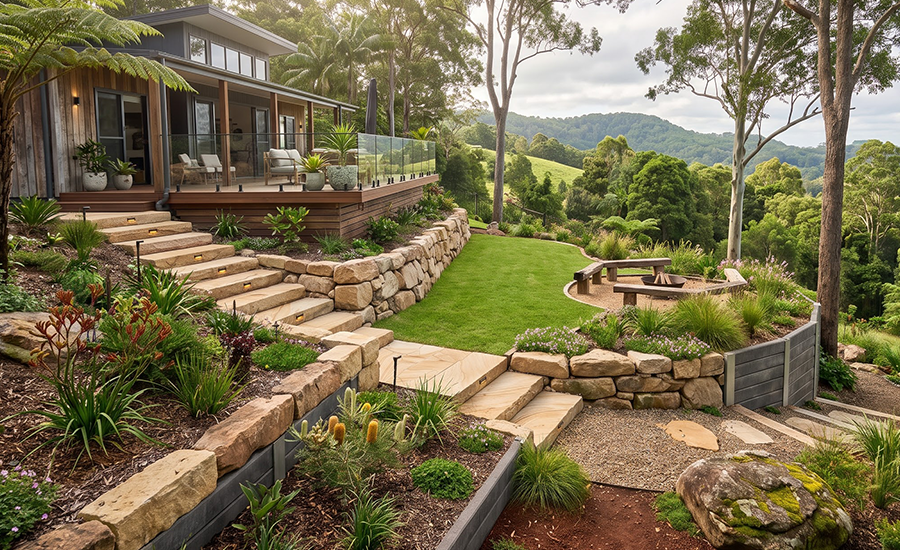
The secret to landscaping sloping blocks Tamborine homes sit on is simple: control the water first, build tiered retaining walls to create usable levels, then plant the slope with tough ground cover that holds the soil. Get that order right and a steep slope becomes the best part of your property instead of the hardest part to manage.
If you live on Tamborine Mountain or in the surrounding hinterland, you already know the views come with a catch. The backyard that looked so dramatic at inspection is hard to mow, hard to walk and hard to keep in one piece after a summer storm. This guide shows you how to fix that.
What to Consider When Landscaping Sloping Blocks in Tamborine, Queensland
Rainfall, soil, council overlays and access shape every decision on a Tamborine slope, so understand all four before you sketch a single garden bed.
Rainfall. The mountain records noticeably more rain than the coast below, and the Bureau of Meteorology’s climate data shows the bulk of it falls in the warmer months, often in short, heavy storms.
Soil. Much of Tamborine Mountain sits on rich red basalt soil. It grows beautiful gardens but washes away fast once bare. Lower down, around Wongawallan, Guanaba and Canungra, you’re more likely to strike heavy clay that holds water and pushes hard against walls.
Overlays and access. Many hillside properties are mapped under landslide hazard or vegetation overlays in the Scenic Rim Regional Council planning scheme or the City of Gold Coast City Plan, and you can check your lot on each council’s online mapping before you plan any earthworks. Narrow, steep driveways also limit what machinery can reach the work area, which affects both design and price.
Measure the fall too. Run a level string line out from the top of the slope, measure the drop over a known distance, and you have your gradient. As a rough guide, a gentle fall of around 1 in 10 can often be shaped with garden beds and ground cover, 1 in 10 to 1 in 4 suits low terraces, and anything steeper usually needs engineered walls or professional advice.
Drainage Solutions for Erosion and Soil Stability on a Steep Slope
Water is what moves soil, so drainage solutions come before walls, paths or plants on any steep slope. Walk your block during heavy rain if you can, and note where water enters, where it concentrates and where it leaves. Then plan to slow it down, spread it out and let it soak in. That’s a core permaculture principle, and it suits Tamborine hillsides perfectly.
- Swales dug along the contour catch runoff and let it soak in
- Rock-lined spoon drains carry overflow safely past buildings
- Mulched, planted zones act as a sponge rather than a slide
How to Drain Water and Improve Drainage Behind a Retaining Wall
Every retaining wall needs a free-draining gravel layer, slotted ag pipe at the base and a safe outlet for the water it collects. Without them, water pressure builds until the wall leans, bulges or fails. Our guide to retaining wall drainage explains what a proper drainage layer looks like.
Tiered Retaining Wall Design and Terraces That Create Usable Space
Tiered retaining walls are the most reliable way to turn a steep slope into flat, usable space for a lawn, a vegetable terrace or an outdoor table. A series of lower walls spreads the load, sits more softly in the landscape, and every planted terrace adds to your erosion control.
In Queensland, walls over one metre high, or walls carrying extra load from driveways or buildings nearby, generally need building approval and design by an RPEQ engineer. Retaining wall work above a set dollar value must also be done by a contractor licensed with the Queensland Building and Construction Commission. Our article on retaining wall approval in QLD covers the rules in plain English.
Which Retaining Wall Materials Suit Each Tier?
The right material depends on wall height, site access and the look you want.
| Material | Best for | Things to know |
| Timber sleepers | Low garden walls and budget terraces | Shortest lifespan in wet conditions; use H4 treated timber at minimum |
| Concrete sleepers | Mid-height walls and long runs | Durable and tidy; posts need properly sized footings |
| Segmental blocks | Engineered walls and curved tiers | Modular units suit sites where big machinery can’t reach |
| Natural rock | Feature walls and bush-style gardens | Blends with the landscape; needs machinery to place safely |
Safe, Practical Steps and Paths for a Sloping Block or Sloped Backyard
A sloped yard you can’t walk comfortably is one you won’t use, so practical access deserves as much thought as level ground. Map the routes you use every day: carrying the shopping, wheeling the bins, walking down to the chook pen.
Wide, shallow steps with a consistent rise are far safer than steep, uneven ones, especially at night. Paths that follow the contour are gentler than ones charging straight downhill, and textured stone grips better after rain. Add a handrail and low lighting on the steepest runs.
Sloping Block Landscaping Ideas for Decks, Patios and Outdoor Living
A deck is usually the quickest way to gain outdoor living space on a sloping block, because it sits above the slope rather than cutting into it. Patios work best on the flat terraces your retaining walls create, close to the house.
Good landscape design links these spaces with steps and planting, so the whole backyard feels connected rather than scattered down the hill, and well-planned outdoor living can add to your property’s appeal and value. Our guide explains how decking, retaining walls and levels work together as one system.
Best Plants for a Sloping Garden in Queensland
The best plants for a Queensland sloping garden are hardy natives with deep, fibrous roots and dense ground cover that shields the soil from heavy rain. Lomandra, dianella, native grasses and creeping groundcovers generally cope well with wet summers and need little water once established. Skip lawn on anything steep; mowing a sloping lawn is unpleasant at best and dangerous at worst.
A permaculture-inspired layout suits terraced slopes beautifully. Fruit trees on lower terraces benefit from moisture draining downhill, herbs and vegetables sit closest to the house, and tough natives fill the steepest outer zones. Jute or coir matting holds new plantings until roots take over. On acreage, our ideas for low-maintenance landscapes on large properties are worth a look too.
How to Landscape a Steep or Small Sloping Backyard on a Budget
The cheapest way to landscape a sloping backyard is to do the soft work yourself and leave the structural work to a professional. On a small sloping backyard, one or two low terraces and a set of steps often deliver most of the benefit for a modest spend.
Here’s a scene we come across more often than you’d think: someone stacks a few sleepers to level a garden bed, and after the first wet season the whole lot is leaning forward like it’s peering over the edge. It’s not a lack of effort, just water doing what water does.
| Job | DIY friendly? |
| Mulching and planting ground cover | Yes |
| Small swales on gentle slopes | With care |
| Retaining walls over one metre | No, approval and engineering required |
| Excavation on steep or unstable ground | No |
| Any work on landslide overlay land | Get professional advice first |
How Much Does It Cost to Landscape a Sloping Block, and What Affects the Price?
Cost varies widely, and on the mountain access is often the biggest factor. If a small excavator can’t reach the work area, more is done by hand and the job takes longer. Soil volumes, engineering, drainage and wall materials also affect the price, whether you’re in Tamborine, Brisbane or on the Gold Coast. To keep a budget manageable, stage the project: drainage and walls first, then decks and planting as funds allow, so nothing has to be pulled out and redone.
Frequently Asked Questions About Sloping Block Landscaping in Queensland
Do I need engineering or council approval for retaining walls or other changes to a slope?
Generally, yes, for retaining walls over one metre or walls that carry extra load. Large cut and fill earthworks can also need council approval, especially on land under a landslide hazard overlay. Most of Tamborine Mountain falls under Scenic Rim Regional Council, while parts of the surrounding hinterland sit with the City of Gold Coast, so check with the right council before you start.
Can you landscape a sloping block without retaining walls?
On gentler slopes, yes. Swales, rock steps, mulched beds and ground cover planting can stabilise the soil without walls. Steeper slopes usually need walls to create flat, usable space.
When is the best time to landscape a sloping block in Tamborine?
Late autumn through early spring. Drier weather makes earthworks safer, and plants have time to establish before summer storms test the slope.
How long does a sloping block project take?
Planting and small drainage jobs can take a few days. Projects with engineered walls, approvals and decks usually run several weeks, longer if access is tight or the weather turns wet.
Ways to Make a Sloping Block More Usable and Attractive
A steep block isn’t a problem to fight; it’s a site to plan properly. Manage the water, use tiered retaining walls for usable levels, add safe access and outdoor living, and let deep-rooted planting lock it all in. Done in that order, landscaping sloping blocks in Tamborine gives you a safer, more sustainable property you’ll actually enjoy.
Coordinating all of that is exactly what we do every day at Greener Landscaping (yes, we know, the landscaper recommending a landscaper). From Tamborine Mountain landscaping to projects across the Gold Coast, Brisbane and the Sunshine Coast, we’d love to help. Greener Landscaping, call 07 4120 7807 for a free quote.