You can spot the difference between a backyard built properly and one rushed in about 12 months. The proper one still looks the way it did on handover day. The rushed one has settling around walls, soggy patches in the lawn, garden beds that won’t drain, and turf that yellows in the same spots every wet season. The visible work looks similar in both cases. Good landscape site preparation decided the outcome below ground, before a single sleeper or paver hit the site.
Site preparation is the foundation that everything visible sits on. Get it right and the lawn, garden, and structural elements perform for the next 10 to 15 years. Skip it or rush it, and no amount of premium turf, expensive paving, or quality plant selection saves the result.
Here’s what actually happens beneath the surface of a well-built Sunshine Coast yard, and why it matters more than anything you can see from the back door.
Why Landscape Site Preparation Decides Every Landscape Project
Every above-ground feature (walls, decks, lawn, garden, paving) sits on something. That something either holds, drains, and supports correctly, or it doesn’t. There’s no middle ground over a long enough timeline.
Good site and soil preparation covers four critical areas:
- Water flow paths that move stormwater away from structures
- Soil type and profile, including the layers under topsoil and turf
- Soil compaction levels that prevent slumping and movement
- Site shape and grading that controls how water moves across the block
Get those four right and the landscape works with the climate. Get any of them wrong and the climate works against you. Across the Sunshine Coast (Buderim, Maroochydore, Caloundra, Nambour, and the hinterland), the wet season makes that mistake expensive within two summers.
Landscape Site Preparation and Water Flow Management
Drainage and soil preparation are the single biggest factors in whether a landscape lasts. Sunshine Coast clay holds water hard, summer storms drop serious volumes in short bursts, and any structure without a designed path for runoff becomes a problem.
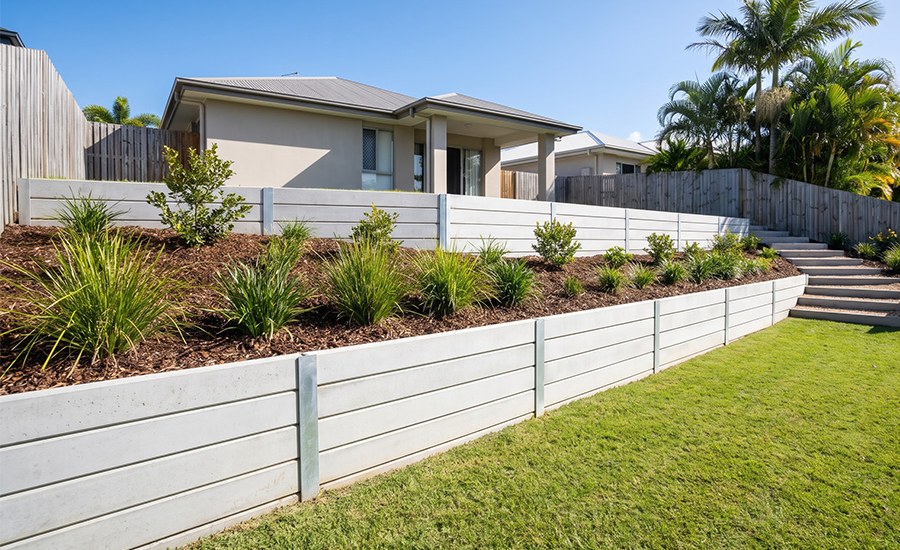
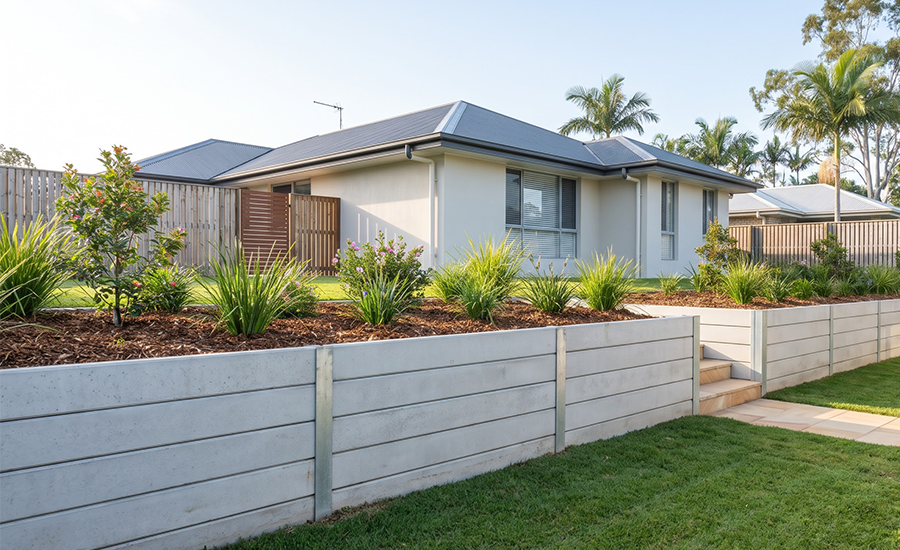
Behind a wall holding back soil, that means an aggregate backfill cell, ag pipe set at the right level, weep holes in the wall face, and an outlet that goes somewhere useful. Under a lawn, it means subsurface lines that catch water before it pools. Around a deck, patio, or pool surrounds, it means falls designed to push runoff into a swale, pathway drain, or absorption zone.
Water management planned at the design stage costs a fraction of what retrofitting costs after problems start. Once turf is down, garden beds are planted, and paving is laid, fixing drainage issues means tearing things up. Our guide to timber, block, and concrete retaining walls in coastal QLD covers how water flow integrates with the wall structure itself.
Landscape Site Preparation: Managing Water Below Ground
A common mistake is assuming surface flow handles everything. It doesn’t. Water that can’t infiltrate has to go somewhere, and it almost always finds wherever you didn’t want it: the back of the slab, the base of the wall, the low corner of the lawn. Subsurface drainage gives that water a designed path before it picks its own.
Soil Type, Garden Topsoil, and Profile Layering
Most homeowners think of soil as one thing. It isn’t. A healthy landscape site has a layered profile: a base layer of subsoil for structure, a transition layer for root system penetration and water movement, and a topsoil layer that supports lawn, garden, and shrub planting. Each layer has a job, and skipping any of them creates problems above ground.
The common scenario on new builds is straightforward. A builder scrapes the site flat, exports the topsoil, leaves heavy subsoil exposed, and the new garden inherits a block where nothing wants to grow. Lawn turns yellow, beds struggle, and the obvious fix (more compost, more fertiliser) doesn’t address the actual problem, which is that the soil profile is broken.
Rebuilding a healthy profile means importing the right materials in the right order: a free-draining base where needed, a transition mix, and quality topsoil at the surface. Sandy mixes suit some applications, heavier loams suit others. For lawn areas specifically, our breakdown of large-scale turf prep covers the soil work that has to happen before turf is laid.
Soil Compaction and Installing Structural Elements
Compaction is one of those issues nobody sees until it’s a problem. During construction, every machine pass over the site compresses the soil beneath it. By the time a builder hands over a block, the soil structure across the build area is heavily worked, especially in zones where excavators, trucks, and bobcats spent time.
Compressed soil drains poorly, restricts root growth, and shifts unpredictably under load. Installing paving on a poorly prepared subgrade opens joints within a year. Laying turf on tight subsoil leaves you watching it struggle for five years. Pouring a slab on subgrade that wasn’t tested risks cracking no amount of patching fixes.
Proper preparation includes deliberate compaction at the right level for each application: engineered values for structural elements, looser cultivation for planted areas, using the right machinery and an experienced operator. It’s unglamorous, expensive, and impossible to see once finished. It’s also one of the strongest predictors of how the landscape performs in year five.
Landscape Design: Site Grading, Slope, and Shape
The slope and shape of your finished site decides where water goes when it lands. Get the grading right and stormwater flows away from buildings, away from low corners, and into drains, swales, or absorption zones designed for it. Get it wrong and water pools, pools become permanent wet patches, and wet patches kill turf, rot timber, and undermine structures.
On sloping blocks, grading is even more critical because the natural fall already works against you. Tiered levels, retaining walls, and surface drains need to work as one system rather than separate features. Our deep dive into how decking, retaining walls, and levels work together on sloping blocks covers the integration in detail.
Planting, Irrigation, and Lawn Establishment
Once the structural site work is done, planting and lawn establishment go in. Good preparation here means root zones loosened for shrub and tree planting, soil amended where needed, and irrigation lines (drip irrigation for garden beds, pop-up sprays for lawn) laid before mulch goes down.
Water use is a real factor in Sunshine Coast landscape design. A well-designed irrigation layout delivers moist soil where plants need it without wasting water on areas that don’t, which keeps water bills sensible and plants healthy through the dry months. Mulch holds that moisture in place and protects soil temperature, especially through the first season as new plantings establish.
Hardscaping and Landscape Construction Sequence
Hardscape elements (paving, walls, patios, pathway runs) go in after major site prep and before final planting. A logical landscaping project starts with bulk earthworks and stormwater, moves through hardscaping construction, then finishes with planting and lawn.
Lighting, where included, gets cabled at the hardscape stage so conduits run under finished surfaces. Skip that step and you’re cutting up new paving in 12 months to add the lighting you should have planned for. Landscape design that treats lighting as an afterthought always costs more than landscape design that builds it in from the start.
Council Requirements That Sit Underground
Plenty of Sunshine Coast Council requirements specifically target below ground work most owners never think about. Stormwater connection points, discharge rules, easements that run through properties, and the engineering required for walls above 1m all live in the preparation phase. Most rectification orders come from groundwork that wasn’t approved, not from visible finishes. Our guide to Sunshine Coast landscaping regulations covers the approvals that need to be in place before any excavation begins.
What Below Ground Preparation Costs Homeowners
Proper preparation is a meaningful percentage of total project cost, often 25 to 40 percent on jobs involving walls, stormwater, or significant level changes. That figure is uncomfortable for anyone who wants to see budget go toward visible features.
The trade-off is worth understanding. A yard with $20,000 of finishes on $5,000 of inadequate site work looks brilliant on handover and starts failing within 18 months. A yard with $15,000 of finishes on $10,000 of correct preparation doesn’t look as showy on day one but still looks the same 10 years in. Honestly, the homeowners who push back hardest on preparation costs are usually the ones we come back to two years later to fix problems the original work would have prevented. That’s why we’d rather have an honest cost conversation at the consultation than a hard one later.
The Order Good Landscape Construction Follows
There’s a logical sequence to subsurface work that runs underneath the visible build order:
- Site survey, layout, and stormwater plan
- Approvals secured before excavation
- Vegetation and debris cleared from the build area
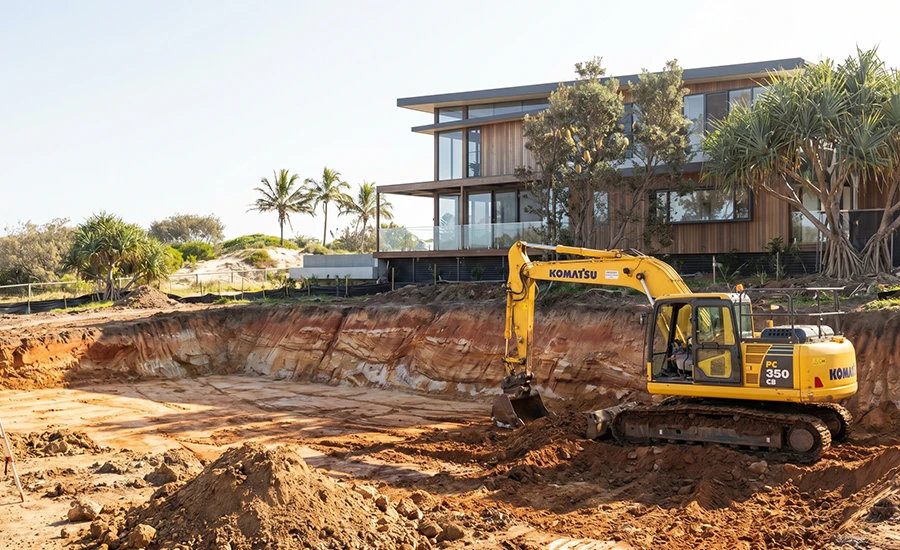
- Bulk excavation and grading to engineered levels
- Subsurface drainage installed before any structure goes up
- Wall footings, backfill, and engineered compaction
- Subgrade prep for paving, decking footings, and turf
- Topsoil and growing medium imported and graded last
Each stage sets up the next. Skip a step and the next one fails or has to be redone, which is always more expensive than getting it right the first time. The aesthetic and functionality of the finished landscape both depend on that order.
Frequently Asked Questions
Why does my lawn struggle even though I water and fertilise regularly?
Almost always a below ground problem. Compressed soil, broken soil profile, or inadequate subsurface paths hold a lawn back regardless of how well you maintain the surface. Soil that drains and breathes properly grows healthy turf with minimal intervention.
How Does Landscape Site Preparation Prevent Drainage Problems?
The signs include pooling water 24 hours after rain, soggy patches that never dry, yellowing turf in consistent spots, garden beds that smell sour when you dig down, and movement at the base of walls. Any of those suggest subsurface paths aren’t doing their job.
Can site preparation be retrofitted after landscaping is finished?
Yes, but it’s significantly more expensive than installing it during the original build. Retrofitting usually means lifting paving, tearing up turf, and reinstating finished surfaces after the work is done. The cost can easily be three to four times what proper preparation would have cost at the build stage.
Is DIY site preparation realistic?
For small garden makeovers, yes. For anything involving stormwater, structural elements, or large turf areas, almost never. You need the right machinery, an experienced operator, and a clear plan. DIY at scale usually creates more problems than it solves.
How much of my landscaping budget should go to below ground work?
On projects involving walls, stormwater, or major level changes, expect 25 to 40 percent. On flat blocks with no structural work, the figure drops to 10 to 15 percent. Lower than that and there’s a good chance corners are being cut where they shouldn’t be.
Does site preparation need council approval?
Stormwater connections, discharge, and walls over 1m generally need approval. So do works affecting easements or boundary setbacks. Always check with Sunshine Coast Council at the design stage, not after work has started.
Build Below The Surface Before You Build Above It
To create a landscape that lasts, you have to start with what nobody will ever see. Water flow paths, soil profiles, compaction levels, and site grading decide whether the visible work lasts 18 months or 18 years. Spend the money below ground and the visible work performs for the long haul. Skip it and you’ll pay for the same project twice. That’s what we do every day at Greener Landscaping.
If you’re planning a Sunshine Coast landscaping project and you want it done properly the first time, give us a call on 07 4120 7807. We’ll book a consultation, walk through the site, talk through the preparation that needs to happen, and put together a build sequence that gets the invisible work right before any of the visible work begins.
Related posts:
- Deck or Patio? How to Choose the Right Feature for Your Yard
- How Sunshine Coast Landscaping Adds Real Value to Your Property (With Local Examples)
- Sunshine Coast Landscaping Regulations: What You Need to Know Before You Build
- What to Build First in Your Backyard: The Ultimate DIY Backyard Planning Guide