A raised garden bed sounds simple enough. A frame, some soil, a few plants. But if you’ve ever watched a beautifully built garden bed turn into a waterlogged mess after a Sunshine Coast downpour, or seen timber walls bow and rot within a couple of seasons, you already know there’s more to it than that. The difference between a raised garden bed that thrives for a decade and one that fails in two years almost always comes down to decisions made before a single seed goes in.
Why Raised Garden Beds Work Well in Southeast Queensland
The Sunshine Coast climate is generous in a lot of ways, but it can be brutal on poorly built garden infrastructure. Heavy summer rainfall, high humidity, and warm soil temperatures year-round create conditions where drainage and soil quality matter far more than they would in a cooler, drier climate.
Raised garden beds address several problems at once. They give you direct control over soil quality regardless of what’s underneath, they improve drainage on properties with heavy clay or compacted ground, and they make gardening more accessible and easier to manage. For homeowners dealing with sloping blocks, they also work hand in hand with retaining walls to create functional, tiered outdoor spaces that landscape the whole property as a cohesive system.
Getting the Drainage Right
This is the part most garden bed guides skip over, and it’s the part that matters most.
What happens when proper drainage isn’t there
When water can’t escape freely from a raised garden bed, roots sit in saturated soil, nutrients leach out, and plants decline even when everything else looks right. On the Sunshine Coast, where a single storm can dump significant rainfall in a short window, poor drainage isn’t a minor inconvenience. It’s the reason most garden beds fail ahead of schedule.
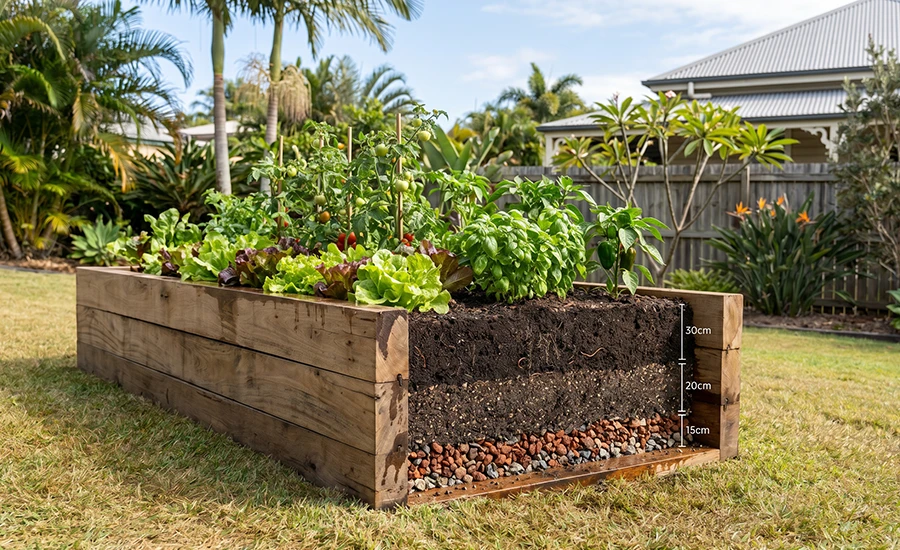
The fix isn’t complicated, but it needs to be designed in from the start. A proper drainage layer at the base of the bed using coarse gravel or scoria allows excess water to move freely out of the root zone. Where beds are built against retaining walls or solid structures, drainage outlets need to be factored into the design so water has somewhere to go.
Slope and placement
Where you position a raised garden bed on your property affects how water behaves around it. Beds placed at the base of a slope will collect runoff from above unless the surrounding landscape is graded to direct water away. Getting placement right at the planning stage saves a lot of remediation work later.
Soil Mix: What Goes In Determines What Comes Out
The whole point of a raised garden bed is that you control the growing medium. Don’t waste that advantage by filling the bed with whatever is cheapest.
A quality soil mix for Southeast Queensland raised beds should drain freely while retaining enough moisture and nutrients to support plant growth between watering. A good starting point is a blend of quality compost, coarse sand or perlite for drainage, and a loam-based growing medium. Avoid heavy garden soil or fill, Both compact quickly in a raised bed environment and create the same drainage problems you were trying to solve.
Soil in raised beds breaks down and compacts over time. Plan to top up with compost at least once a year, and add organic matter more substantially every three to four years depending on what you’re growing.
Choosing the Right Materials for Your Garden Bed
The frame is what people see, but it’s also what takes the most punishment from Queensland conditions. Durable material choice upfront pays for itself many times over.
Timber options
Treated pine is the most common choice and works well when correctly specified. Look for H4 or H5 treated pine for ground-contact applications. Untreated or lightly treated timber in direct soil contact in this climate won’t last. Hardwood sleepers are a more durable option and suit a more substantial, architectural look in the garden.
Avoid railway sleepers unless you can confirm they’re free of creosote. Older ones can leach compounds into soil that you really don’t want near food plants. Untreated hardwood is a better choice if you want a natural timber finish without the treatment question.
Steel and alternative materials
Cor-Ten and colorbond steel raised garden beds have become popular for good reason. They’re extremely durable, they handle the Queensland climate without rotting, and they suit a clean, modern garden aesthetic. Powder-coated steel and bluescope products are also worth considering. All are a higher upfront cost than timber but deliver a longer service life with far less maintenance.
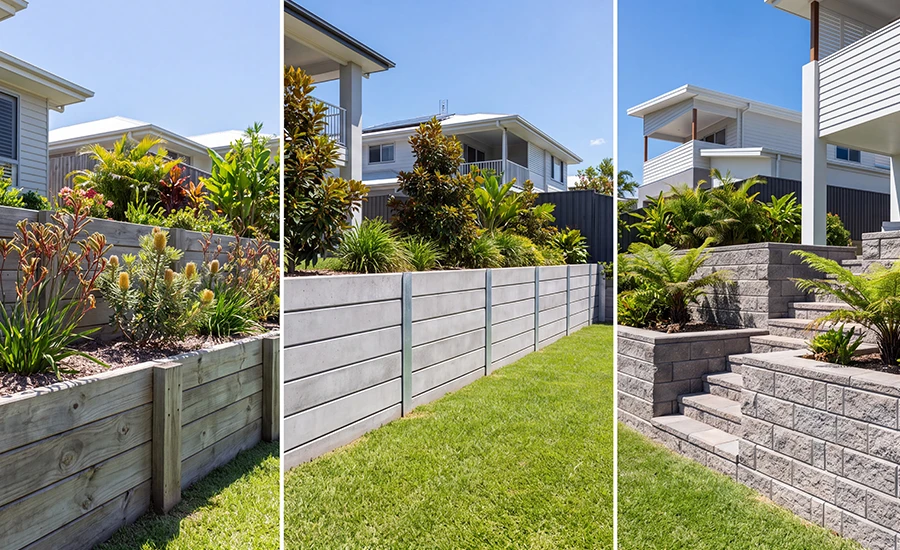
Concrete block and besser block construction suits larger, more permanent garden bed installations. Where raised garden beds are being integrated into a broader retaining wall and landscaping project, block construction allows everything to be built as a cohesive system with consistent finishes.
Raised Garden Beds vs In-Ground Gardens in Queensland
The honest answer is that both have their place, and the right choice depends on your soil, your site, and what you want to grow.
In-ground gardens work well where the existing soil is good, drainage is adequate, and you’re planting deep-rooted species that benefit from unrestricted root depth. On the Sunshine Coast, that’s less common than you’d think. Heavy clay subsoils, compacted fill on newer developments, and poor nutrient profiles make in-ground planting a constant battle on many properties.
Raised garden beds sidestep most of those problems. They’re particularly well suited to growing vegetables, herbs, and shallow-rooted ornamentals where soil quality directly affects yield and performance. The tradeoff is cost upfront and the ongoing need to maintain the soil mix, but for most Sunshine Coast blocks the raised bed approach produces far better results long-term.
FAQ
How deep should a raised garden bed be on the Sunshine Coast?
For most vegetables and herbs, 300mm to 400mm of quality growing medium is sufficient. Root vegetables like carrots benefit from 450mm or more. Ornamental garden beds can work with less, but deeper beds retain moisture better through the dry season and give roots more room to develop.
What’s the best timber for raised garden beds in Queensland?
H4 or H5 treated pine for ground-contact applications, or hardwood sleepers for a more durable and substantial finish. Avoid untreated timber in direct soil contact as the humidity and rainfall in coastal Queensland will shorten its lifespan significantly.
Do raised garden beds need drainage holes?
Yes. Without a way for excess water to escape, the base of the bed becomes waterlogged during heavy rain. A drainage layer of coarse gravel or scoria at the base is essential, and if the bed is built against a solid structure, a drainage outlet needs to be incorporated into the design.
Can raised garden beds be integrated with retaining walls?
Absolutely, and on sloping Sunshine Coast blocks this is often the most practical approach. Retaining walls create the level platforms, and raised garden beds sit within or above those platforms as part of a cohesive landscape design. Building both together rather than adding garden beds as an afterthought produces a much cleaner and more durable result.
How often does the soil mix need refreshing?
Top up with compost annually and plan a fuller refresh every three to four years depending on what you’re growing. The frame lifespan depends on materials: treated pine typically lasts ten to fifteen years, hardwood fifteen to twenty-five years, and steel twenty years or more with minimal attention.
Build Your Garden Beds Right and They’ll Work for You for Years
Raised garden beds are one of the most satisfying additions to a Sunshine Coast property when they’re built properly. The ones that disappoint are almost always the ones where drainage and soil quality were treated as afterthoughts.
If you’re planning raised garden beds as part of a broader landscaping project… or you want beds that integrate properly with retaining walls or level changes on your block, then it’s worth talking to someone who understands how all the elements work together. That’s what we do every day at Greener Landscaping across the Sunshine Coast and Gold Coast.
Call Greener Landscaping on 07 4120 7807 for a free quote.